
Small gardens can still produce a useful amount of fruit if the trees are chosen with care. The main constraint is not simply space on the ground, but the final height and spread of the tree, the amount of sun available, and how much pruning a gardener is willing to do each year. In Britain, where many gardens are compact and conditions vary from damp northern plots to sheltered southern courtyards, success usually depends on matching the tree to the site rather than chasing the biggest crop.
The fruit trees specialists at Fruit-Trees nursery advise gardeners to look first at rootstock, pollination needs and trained forms before they buy fruit trees, because a small garden benefits far more from a well-sized tree than from a vigorous variety that quickly outgrows the space. That point is often missed by new gardeners, who may focus on the fruit itself without checking how large the tree will become.
A small garden tree should earn its place. It should crop reliably, stay manageable, offer some seasonal interest and avoid creating too much shade for the rest of the garden. That is why certain fruit trees perform better than others in limited spaces. The best choices are not always the rarest or most fashionable. They are the ones that combine sensible growth habits with dependable fruiting in ordinary British conditions.
What Makes a Fruit Tree Suitable for a Small Garden
Before choosing a species, it is worth understanding what “small” really means in practical gardening terms. Many trees sold for home growing can still become surprisingly large unless they are on a dwarfing or semi-dwarfing rootstock. A tree labelled as suitable for domestic gardens may still end up dominating a narrow lawn or crowding a patio if its rootstock is too vigorous. In most small British gardens, the aim is to keep a fruit tree within easy reach for pruning, thinning and picking, while allowing enough air movement around it to reduce disease.
Rootstock is therefore central to the decision. It controls much of the final size and vigour of the tree, regardless of the fruiting variety grafted on top. Trained forms matter too. Bush, spindle, cordon, fan and espalier shapes allow gardeners to fit fruit trees into borders, along fences or against walls. For some species, a trained form is not just a space-saving option but the most practical way to achieve reliable cropping.
Pollination is another issue that affects small gardens more than large orchards. A single tree may need a compatible partner nearby, though this can sometimes be provided by a neighbour’s tree or by choosing a self-fertile variety. Gardeners with room for only one specimen should check this before planting. A tree that flowers well but never sets much fruit is a common disappointment in small plots.
Sunlight and airflow also shape the shortlist. Fruit trees generally need a bright position and do not respond well to deep shade. In a tight garden surrounded by fences, sheds or neighbouring houses, the warmest and brightest areas are often along a south- or west-facing boundary. That makes wall-trained trees especially useful. Shelter helps blossom in spring, but stagnant air can encourage fungal problems, so the best sites are protected without being enclosed.
Finally, there is the question of maintenance. Small gardens often suit gardeners who want an orderly, efficient planting scheme rather than a high-maintenance mini orchard. The best trees for these spaces are those that fruit predictably, respond well to routine pruning and do not demand constant correction. On that basis, five types stand out again and again in British gardens.
Apple Trees: The Most Flexible Choice for British Gardens
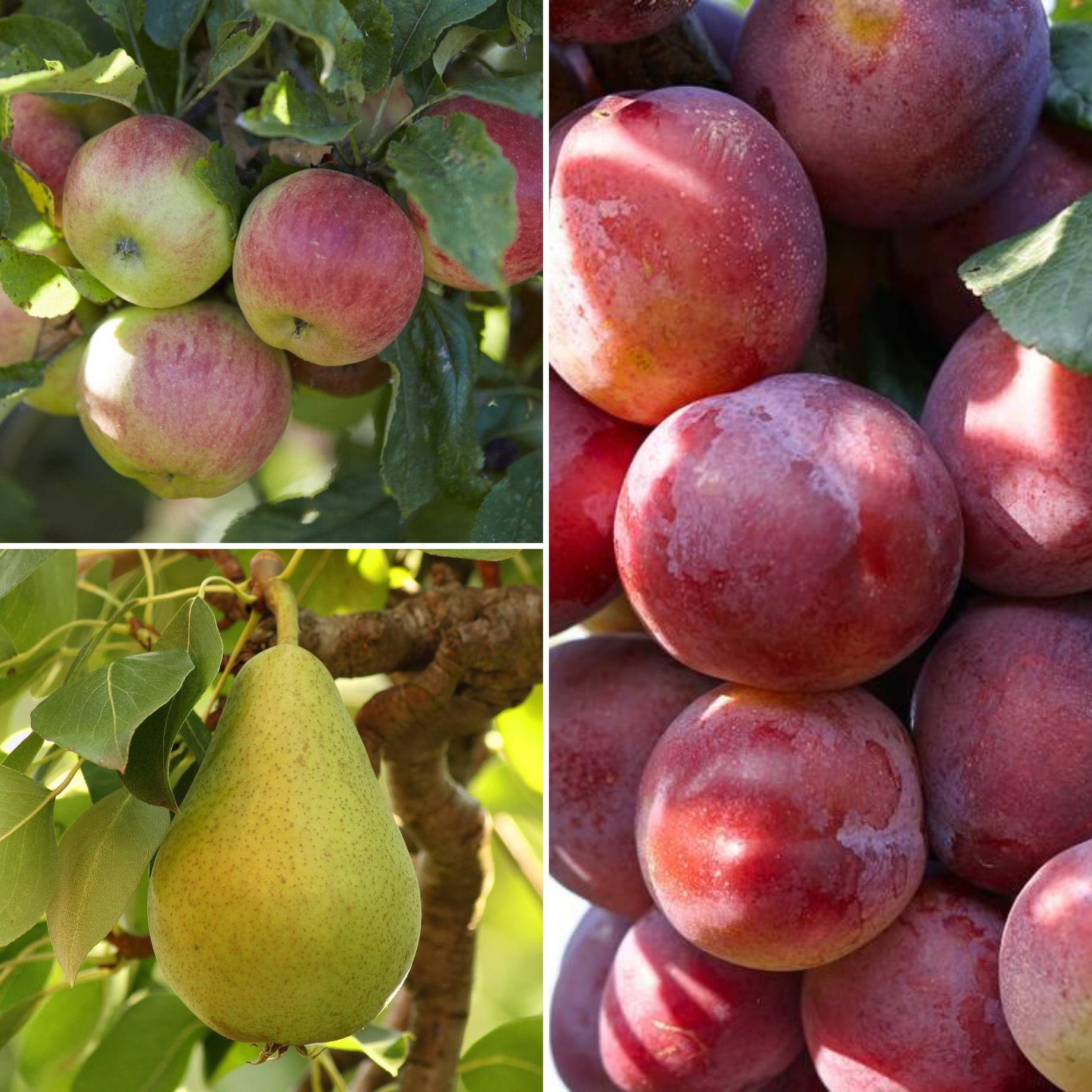
If only one fruit tree had to be recommended for the average small garden in Britain, it would usually be the apple. Apples are adaptable, familiar, widely available and suited to a range of trained forms. They also cope with the British climate better than many more tender fruits. A well-chosen apple tree can fit into a very small space while still giving a proper harvest, whether planted as a dwarf bush, a cordon along a path, or an espalier on a fence.
The great strength of the apple is flexibility. Dwarfing rootstocks allow a tree to stay compact, and the choice of dessert, cooking or dual-purpose varieties means gardeners can grow fruit that matches how they actually eat and cook. In a household that values practical produce, that matters. There is little point giving space to a tree that crops heavily if the fruit is not wanted in the kitchen.
Apples also have a long picking season. Early varieties can be eaten fresh in late summer, while later kinds store well into autumn and winter. That gives a small garden more value over time. Instead of one brief glut, the gardener can choose varieties that spread the harvest or store reliably. In ornamental terms, apple trees also bring spring blossom and decent structure without becoming overwhelming.
For very restricted plots, cordons are especially useful. They occupy minimal ground space and can be trained vertically or at an angle against wires, making them suitable for side returns, narrow borders and kitchen garden layouts. Espaliers are slightly more formal but equally effective where a fence or wall can support them. A dwarf bush apple, meanwhile, is often the simplest solution for gardeners who want a traditional tree form that stays manageable.
The main caution with apples is pollination. Some are self-fertile, but many perform better with a compatible partner in the same or adjacent flowering group. In an urban or suburban area this is often less of a problem than expected, as neighbouring gardens may supply the necessary pollen. Even so, it is wise to check before planting. Disease resistance is worth prioritising too, especially in gardens where airflow is limited. A resistant variety can save a great deal of trouble with scab or mildew later on.
Pear Trees: Upright, Elegant and Better Than Many Gardeners Expect
Pear trees are often overlooked in favour of apples, yet they can be even more suitable for small gardens in the right position. Their natural habit is relatively upright, which makes them useful where horizontal spread is more of a problem than height. They also adapt well to trained forms, particularly espalier and fan-style arrangements on warm walls or fences. In visual terms, pears bring a neat, refined structure that suits formal and informal gardens alike.
The common assumption is that pears are difficult. In reality, they are best thought of as site-sensitive. Give them decent light, reasonable shelter and fertile, well-drained soil, and they can be productive for many years. In colder, more exposed gardens they may be less reliable than apples, especially if blossom is caught by late frost. In milder or sheltered parts of Britain, however, they often do very well.
For small spaces, pears earn their place because they combine compact form with high-quality fruit. Home-grown pears picked at the right stage can be excellent, often far better than shop fruit that has been handled for storage and transport. That quality difference matters. A small garden should ideally produce something worth growing, not merely something that is technically possible to grow.
Wall-trained pears are a particularly strong option. A sunny wall can improve ripening, protect blossom and make the tree easier to manage. This is valuable in narrow gardens, courtyards and plots where every boundary needs to work harder. Even where there is no wall, a pear on a modest rootstock can remain a disciplined tree if pruned properly.
As with apples, pollination needs careful attention. Some pears are self-fertile, but many benefit from a partner. Gardeners with space for only one tree should either choose a self-fertile type or check whether neighbouring trees are likely to help. Pears also require patient harvesting. They are usually picked before they are fully soft and then allowed to finish ripening indoors. Gardeners who expect the fruit to soften properly on the tree may think the crop has failed when it has not. Once that habit is understood, pears become one of the most rewarding small-garden fruits available.
Plum Trees: Productive, Compact and Well Suited to Home Growing
Plums are among the most practical fruit trees for small gardens because they tend to crop generously without needing elaborate training. A good plum tree can provide a substantial harvest from a relatively modest footprint, making it ideal for gardeners who want results from limited space. In Britain, plums also have the advantage of familiarity. They are useful for fresh eating, cooking, preserving and freezing, which makes a single tree more worthwhile.
Compared with apples and pears, plums can feel less formal and more relaxed in habit, but many varieties are naturally manageable in smaller settings. They are often a sound choice for gardeners who do not want the annual precision pruning associated with cordons or espaliers. A compact bush plum in a sunny, sheltered position can be both attractive and productive without becoming a major project.
One reason plums suit small gardens so well is that they bring a strong crop-to-space ratio. A compact tree can produce enough fruit for a household, especially in good summers, and the blossom in spring is an added benefit. In a mixed garden, a plum can sit comfortably in a lawn corner, border edge or productive ornamental area without looking out of place. It does not always need the dedicated framework that pears and apples often benefit from.
There are, however, a few practical points to keep in mind. Plums prefer a warm, sheltered site and can be affected by spring frosts when in flower. In exposed gardens, fruit set may vary from year to year. They are also better pruned in summer rather than winter, mainly to reduce the risk of disease. That seasonal timing is important and sometimes forgotten by beginners moving from apples to stone fruit.
Self-fertility can make plums especially attractive where space is tight. Several good varieties fruit well on their own, which removes the challenge of finding room for a second compatible tree. Even so, nearby pollination can still improve cropping. The fruit often arrives in a concentrated period, so gardeners should be prepared to use or preserve it quickly. That is not really a drawback, but it does mean that a plum tree works best in households that welcome a seasonal glut. For many British gardeners, that is exactly part of the appeal.
Cherry Trees: A Strong Candidate Where Space Is Very Limited
Modern cherry trees deserve a place on any small-garden shortlist, especially now that dwarfing rootstocks and self-fertile varieties have made them more accessible to home growers. For years, cherries were thought of as orchard trees or large garden specimens, but that view is outdated. In a compact British garden, a carefully chosen cherry can now be one of the smartest options, provided the gardener accepts that birds are likely to show as much interest in the crop as humans.
Cherries suit small spaces because they can be grown as compact trees or trained against a wall. They also offer strong ornamental value. Spring blossom is often striking, and the neat foliage gives the tree a clean appearance through the growing season. In a garden where every plant must justify itself both visually and practically, that dual role matters.
Sweet cherries are usually the first choice for home growing, particularly where fruit is intended for fresh eating. Self-fertile types are especially useful in small plots. Sour cherries also have a place, especially in shadier sites, as they can tolerate less sun than sweet cherries and are excellent for cooking. This widens the possibilities for gardens that do not have perfect conditions across every border.
The main challenge is protecting the fruit. In small gardens, bird damage can be severe because the crop is concentrated and highly visible. Netting is often necessary if a meaningful harvest is expected. A smaller tree is far easier to protect than a large one, which is yet another reason compact forms are so valuable. Pruning is also more manageable at that scale, and fruit can be picked safely without ladders.
Cherries prefer warmth and shelter, and blossom may suffer in exposed or frost-prone sites. A fan-trained tree on a sunny wall can solve several problems at once by improving ripening, limiting size and simplifying protection. In dense urban gardens, reflected heat from brick walls can be especially useful. For gardeners who want a fruit tree that feels a little different from the standard apple-and-plum combination, cherries are a strong option. They require a bit more planning, but in return they offer one of the most appealing harvests a small garden can produce.
Fig Trees: Not Traditional Orchard Fruit, but Ideal for the Right Small Space
A fig tree may seem an unexpected inclusion in a British list of top fruit trees, yet for certain small gardens it is one of the best choices available. It works particularly well in sheltered southern gardens, urban courtyards and walled plots where warmth builds up through the season. Figs are not suitable everywhere, but in the right location they solve a problem that many compact gardens face: how to grow something productive in a hot, restricted space where a more vigorous tree would become awkward.
Unlike many orchard trees, figs respond well to root restriction. In fact, limiting the roots can encourage better fruiting and prevent excessive leafy growth. That makes them particularly suitable for small gardens, raised beds and large containers. A fig can be grown against a sunny wall where little else productive would fit comfortably, and its bold foliage gives it ornamental presence without demanding much width at ground level.
For British gardeners, the advantage of the fig is not just novelty. It can be genuinely practical. In warm years and favourable positions, ripe figs from a home tree are far better than most imported ones sold in shops. The tree also tends to avoid some of the pollination complexities associated with apples and pears. Once established, it is a fairly straightforward plant, provided winter cold is not too severe and the site is sheltered.
A fig does need thought at the selection stage. It is not the best all-purpose answer for every small garden in Britain. In colder inland or exposed northern positions, cropping may be inconsistent. But in a south-facing urban garden, or anywhere with a warm wall and reasonable protection, it can be excellent. It also suits gardeners who want a single specimen that combines Mediterranean character with useful fruit.
Because figs can be fan-trained and kept within bounds, they fit neatly into gardens where conventional trees would block light or become structurally dominant. Their maintenance is also different from that of apples or plums, which some gardeners appreciate. For households that want variety in their home growing, a fig adds something distinctive without needing a large footprint. It is not the default British fruit tree, but that is exactly why it can be such a clever choice in a small, well-chosen space.
Choosing the Right Tree Matters More Than Choosing the Rarest One
A small garden does not need a large collection of fruit trees to be productive. In most cases, one or two carefully chosen trees will outperform a crowded planting of unsuitable varieties. Apples remain the most adaptable choice overall, pears are excellent where the site is bright and sheltered, plums offer generous returns from modest space, cherries suit gardeners willing to protect the crop, and figs can excel in warm enclosed gardens. Together, they represent the strongest options for British gardeners working with limited room.
The common thread is control. Small-garden fruit growing succeeds when the tree’s eventual size, shape and pollination needs are understood from the start. That is why trained forms, rootstocks and site conditions matter so much. Gardeners who take time over those details usually find that even a compact plot can support a productive and attractive fruit tree without feeling cramped.
There is also a broader point about how small gardens are used. Fruit trees no longer belong only in dedicated orchards or large country plots. They can form part of ordinary domestic gardens, sharing space with lawns, patios, borders and seating areas. A tree on the right rootstock, in the right form, can act as both crop and structure. In a garden where every square metre counts, that is a sensible way to plant.
For British households thinking practically about what to grow, the best advice is simple: do not buy by fruit alone. Buy by final size, position and ease of management. When those factors come first, the harvest usually follows. And in a small garden, that disciplined approach is what turns a fruit tree from an attractive idea into a long-term success.
